Complete Guide to Sourcing CNC Machined Aluminum Castings from China in 2026
Time :2026-06-07 Hits:0
Why Global Buyers Source CNC Machined Aluminum Castings from China
China has become the world's leading manufacturing hub for aluminum castings and precision CNC machining. For companies in automotive, robotics, telecommunications, industrial automation, medical equipment, and renewable energy sectors, sourcing CNC machined aluminum castings from China offers a unique combination of competitive pricing, advanced manufacturing capabilities, and large-scale production capacity.
At JYF, we work with customers across North America, Europe, and Asia who are looking for reliable aluminum casting and machining partners. One of the primary reasons buyers choose China is the integration of the supply chain. Unlike many Western markets where casting, machining, surface treatment, and assembly are often handled by different suppliers, Chinese manufacturers can frequently complete the entire production process under one roof. This significantly reduces lead times, logistics costs, and quality risks while providing buyers with a single point of contact throughout the project.
For many overseas buyers, the cost advantage remains attractive. However, successful sourcing is not simply about obtaining the lowest price. Understanding casting processes, material selection, quality control systems, and supplier capabilities is essential to achieving long-term success.
Understanding CNC Machined Aluminum Castings
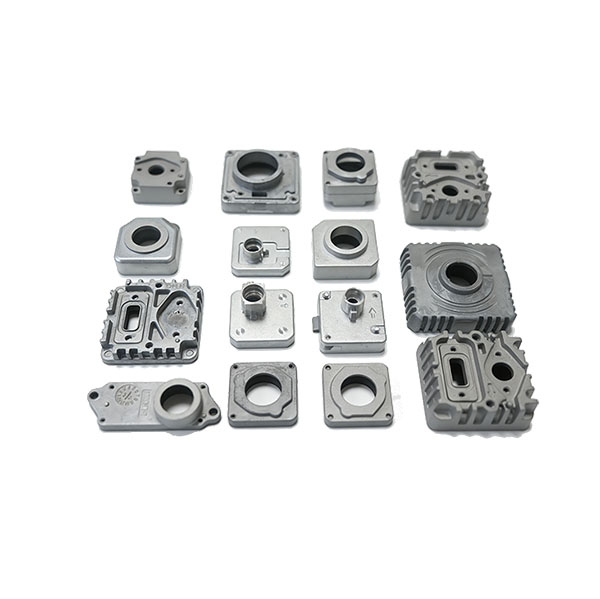
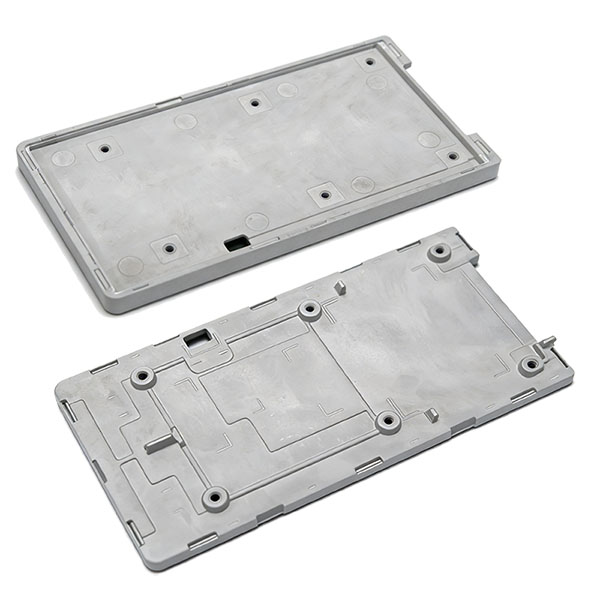
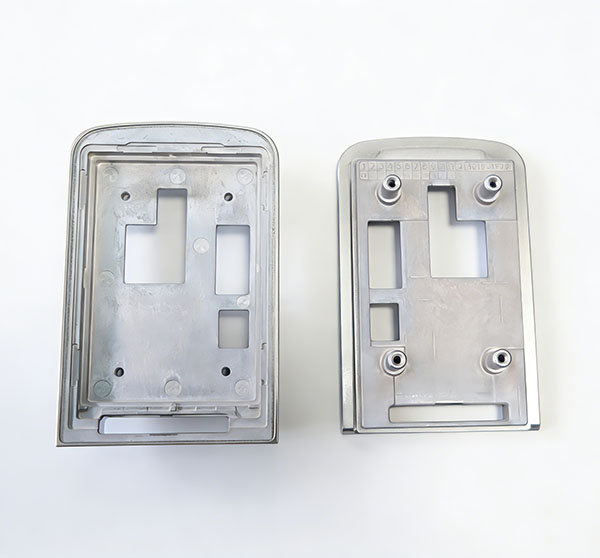
CNC machined aluminum castings combine the efficiency of aluminum casting with the precision of CNC machining. The manufacturing process begins with a cast aluminum blank produced through die casting, gravity casting, low-pressure casting, or sand casting. After casting, critical dimensions, mounting surfaces, threaded holes, and tolerance-sensitive features are machined using CNC equipment.
This hybrid manufacturing approach offers substantial advantages. Casting creates complex geometries at a relatively low cost, while CNC machining ensures the dimensional accuracy required for modern industrial applications. The result is a component that balances performance, quality, and manufacturing efficiency.
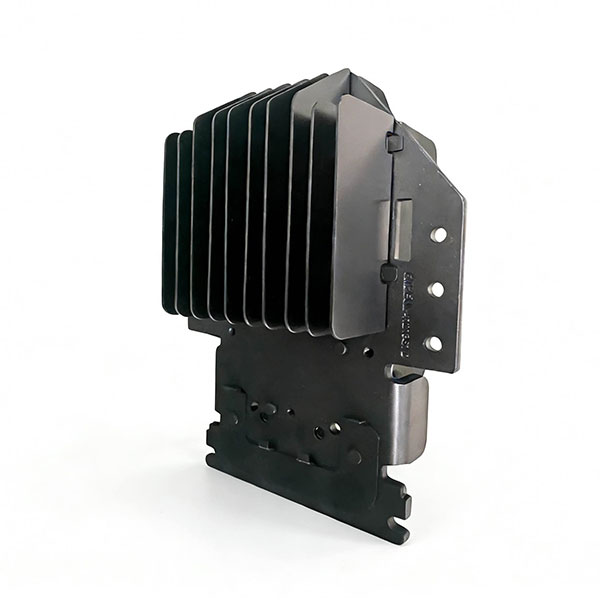
Industries such as robotics, electric vehicles, telecommunications, and industrial equipment increasingly rely on CNC machined aluminum castings because they provide the strength and durability of metal components while reducing overall weight and production costs.
Choosing the Right Casting Process
Selecting the appropriate casting process is one of the most important decisions in any aluminum casting project. Different casting methods produce different levels of density, surface finish quality, mechanical performance, and manufacturing cost.
High-pressure die casting is typically the preferred choice for high-volume production. It offers excellent dimensional consistency, thin-wall capability, and low unit cost once tooling has been completed. Components such as motor housings, communication equipment enclosures, robot structural parts, and consumer electronic housings are commonly produced using this process. For applications requiring airtightness or high structural integrity, vacuum die casting can further reduce internal porosity and improve product quality.
Low-pressure casting is often selected when superior mechanical properties and lower porosity levels are required. This process is widely used in automotive components, battery housings, and pressure-sensitive applications. Although tooling and production costs may be higher than traditional die casting, the improved material density frequently results in lower rejection rates and better long-term performance.
Gravity casting remains a popular option for medium-volume production and products that require stronger material properties than conventional die castings. The lower tooling investment makes it especially attractive for projects in the development stage or applications with moderate annual demand.
For prototype development and low-volume production, sand casting continues to provide a flexible and economical solution. Because tooling costs are relatively low and design modifications can be implemented quickly, sand casting is often used during product validation before transitioning to higher-volume production methods.
Selecting the Right Aluminum Alloy
Material selection directly influences product performance, machinability, corrosion resistance, and manufacturing cost. Choosing the wrong alloy can lead to unnecessary expenses or performance limitations.
ADC12 remains one of the most widely used aluminum die casting alloys in China. Its excellent castability and cost-effectiveness make it ideal for electronic housings, motor covers, and consumer product applications. However, due to its relatively high silicon content, ADC12 is not always suitable for applications requiring premium anodized finishes.
A380 is another common die casting alloy that provides improved strength and durability. It is frequently used in automotive components, industrial equipment housings, and structural applications where mechanical performance is important.
For projects requiring higher strength and better heat treatment response, A356-T6 is often the preferred solution. This alloy is commonly found in automotive wheels, aerospace components, and critical structural parts. Its combination of strength, elongation, and fatigue resistance makes it suitable for demanding environments.
6061-T6 continues to be one of the most versatile aluminum alloys for CNC machining. It offers excellent corrosion resistance, good mechanical properties, and outstanding machinability. For precision components and structural applications, 6061 remains a reliable choice.
How JYF Controls Quality Throughout Production
Quality control is one of the most important factors when sourcing CNC machined aluminum castings from overseas suppliers. At JYF, quality assurance begins long before production starts. During the Design for Manufacturing (DFM) stage, our engineering team evaluates wall thickness distribution, draft angles, machining accessibility, and structural requirements to identify potential manufacturing risks.
During production, every batch of aluminum material undergoes chemical composition verification to ensure compliance with specified alloy standards. Casting processes are monitored closely to maintain consistency in temperature, pressure, and cycle parameters. For critical applications, vacuum die casting and X-ray inspection are used to minimize porosity and internal defects.
After casting, CNC machining operations are performed using advanced machining centers capable of maintaining tight dimensional tolerances. Coordinate Measuring Machines (CMM) are used to verify critical dimensions, flatness, concentricity, and positional accuracy. Additional inspections such as leak testing, surface finish verification, and material certification are performed according to customer requirements.
This comprehensive quality management approach enables JYF to supply aluminum casting solutions for industries where reliability and precision are essential.
How to Choose a Reliable Aluminum Casting Supplier in China
Finding the right supplier requires more than comparing quotations. Buyers should carefully evaluate manufacturing capability, engineering expertise, quality management systems, and export experience.
A qualified supplier should possess relevant certifications such as ISO 9001, while automotive projects may require IATF 16949 certification. Buyers should also review production equipment, inspection capabilities, and previous project experience within their industry.
Factory audits remain one of the most effective methods for supplier evaluation. Whether conducted in person or through virtual factory tours, audits provide valuable insight into production organization, quality management practices, and actual manufacturing capacity. Reviewing sample inspection reports, calibration records, and process control documentation can help verify a supplier's ability to meet project requirements.
At JYF, we encourage customers to evaluate our manufacturing processes, quality systems, and engineering capabilities because transparency is essential to building long-term partnerships.
Why Global Manufacturers Choose JYF
JYF provides a complete manufacturing solution for CNC machined aluminum castings, combining aluminum casting, precision machining, surface finishing, and quality control within a single integrated facility. This approach simplifies supply chain management while improving communication and reducing production lead times.
Our engineering team supports customers from concept development through mass production, helping optimize product design, improve manufacturability, and reduce overall project costs. With extensive experience serving industries including robotics, telecommunications, automotive, industrial automation, and electronics, JYF has developed the expertise necessary to deliver reliable aluminum casting solutions for demanding applications worldwide.
As global demand for lightweight, high-performance components continues to grow, CNC machined aluminum castings remain one of the most effective manufacturing solutions available. By partnering with an experienced supplier such as JYF, buyers can improve product quality, reduce costs, and create a more resilient supply chain for future growth.
Related News
- How to Choose a Reliable Aluminum Die Casting Supplier in China
- Aluminum Die Casting Defects: Porosity, Shrinkage and How to Prevent Them
- China vs Europe Aluminum Die Casting: Cost, Quality and Lead Time Comparison
- EV Battery Housing Manufacturing: Why Aluminum Die Casting Is the Best Solution
- Aluminum Die Casting Cost Breakdown: What You Are Really Paying For
- How to Choose the Right Aluminum Die Casting Supplier: A Practical Guide for Engineering and Procurement Teams
- Minimum Order Quantity (MOQ) in China Aluminum Casting: What Buyers Need to Know Before Requesting a Quote
- German Aluminum Die Casting Supplier Alternative: High-Quality China Manufacturing Solutions from Shenzhen Jinyuanfu